Atti dei notai ai "Confini italiani": il giudizio di Strigno - Banca dati (1511-1895)
The Notarial Deeds collection, preserved at the State Archive of Trento, comprises protocols, either bound or occasionally loose, containing acts drafted by notaries. These are almost always complete and signed by the notary and sometimes accompanied by the notarial mark. During the Restoration period, notaries were organised according to the district (Gericht) in which they practised their profession.
Evidence of notarial activity dates back to the Middle Ages in both the Prince-Bishopric of Trent and the County of Tyrol. However, starting in the second half of the fifteenth century, in the German-speaking jurisdictions of Tyrol, fides and legal certainty were ensured primarily through sealed documents and registers concerning the real estate regime (Verfachbücher), which were drawn up and kept in every jurisdiction (Gericht). Meanwhile, notaries continued to operate in the Trentino-Tyrolean jurisdictions of the Welsche Konfinen district of the county, and it was not until 1773 that new regulations were introduced to standardize these jurisdictions with the rest of the county. These regulations imposed the obligation to record private notarial deeds in registers concerning the real estate regime (Verfachbücher) kept by the districts (Gericht), as was already the practice in the rest of the county.
During the project, 151 preservation units containing the protocols of notaries active in the Strigno district (one of the Trentino-Tyrolean jurisdictions belonging to the the Welsche Konfinen) were catalogued. These notaries were active between 1511 and 1895. The collected data has been compiled into an online database.
Each record provides the following information: surnames and their variants, first names and their variants, paternity and residence, collection, judgement, the years of the start and end of activity, signature, subscriptio, and notes. The data can be consulted through multiple access keys.
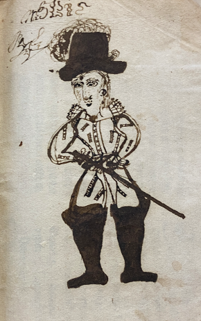
The database also allows users to view images of notarial marks: unique handwritten symbols drawn by the notary next to their signature to guarantee their authenticity.
During the research, a parallel investigation was conducted into the documentation produced by communities for the management of natural resources. This included leases of woodland and pasture portions, the creation of ‘banned’ forests, powers of attorney and other transactions, such as credit instruments and inventories, all of which were recorded by notaries in their deeds. This research enabled the reconstruction of notarial practices and how communities managed and preserved their resources over time.
Scientific coordinator: Katia Occhi
Researcher: Niccolò Caramel
Project funded by
- Fondazione Bruno Kessler – Istituto storico italo-germanico
- Fondazione Cassa di Risparmio di Trento e Rovereto, Bando Archivi 2023
Partners:
- Archivio di Stato di Trento
- Provincia Autonoma di Trento. Unità di missione strategica. Soprintendenza per i beni e le attività culturali. Ufficio beni archivistici, librari e archivio provinciale